


The first signs that something was terribly wrong were the falling and constant headaches.
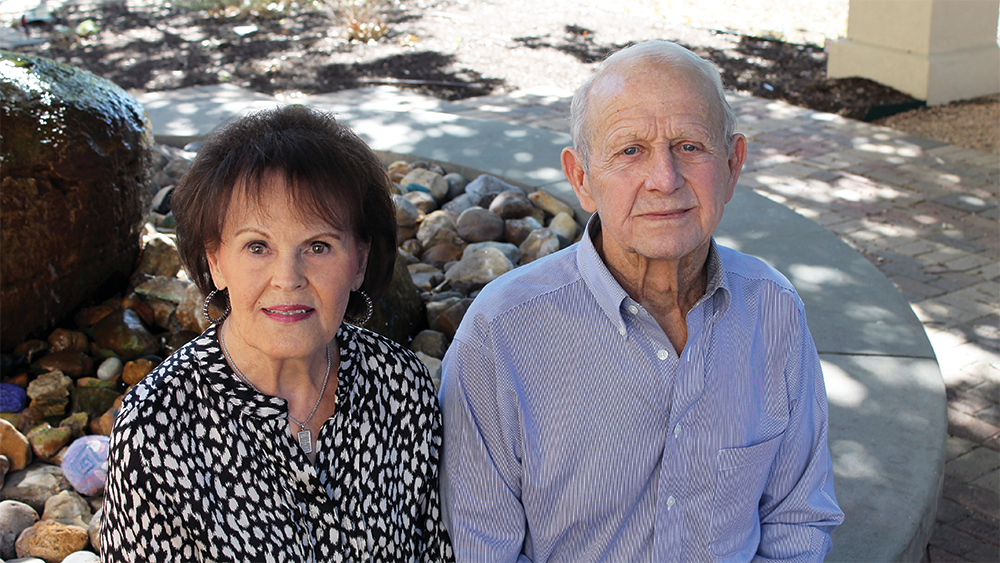
Deborah Hockett was enjoying early retirement with her husband and their 11 grandchildren, spending her days on simple joys such as playing bingo, reading books and attending church prayer breakfasts. When she began stumbling, she brushed it off. However, she soon started collapsing without warning.
“My legs just wouldn’t hold me anymore,” Deborah said.
Then came the headaches—blinding, relentless and unlike anything she had ever experienced. “My pain level was at a nine every single day.”
As weeks passed, Deborah’s strength continued to fade. Numbness crept slowly up her legs. Her arms tingled. Even simple movements left her exhausted. Eventually, she became completely bedridden.
“I couldn’t feed myself, couldn’t get up, couldn’t do anything,” she said.
Terrified and overwhelmed, Deborah reached a breaking point. “Please just put me in a nursing home,” she told her husband, Hilman. “I cannot keep doing this.”
Finding answers and a path forward
Everything changed after a visit from Deborah’s sister who, together with Hilman, insisted she go to the emergency room. After months of fear and uncertainty, Deborah was admitted to Baylor Scott & White Medical Center – Temple.
There, doctors finally gave her a diagnosis: chronic inflammatory demyelinating polyneuropathy (CIDP)—a rare autoimmune disorder in which the body attacks the nerves, disrupting the signals needed for strength and movement.
“I remember thinking, at least now I know what’s wrong with me,” Deborah said. “Not knowing was the worst part.”
Deborah spent 11 days in the hospital receiving plasma exchange to remove the harmful antibodies damaging her nerves. Though still very weak, this marked the beginning of her slow comeback.
She then transferred to Baylor Scott & White Medical Center – Hillcrest, where she spent three weeks in intensive inpatient therapy, working daily to rebuild strength, balance and independence.

How do infusions benefit patients?
Infusion therapy offers an effective way to manage symptoms and slow disease progression in certain neurological conditions.
Some infusions help calm the immune system, preventing it from attacking healthy nerve tissue. Others help reduce inflammation or deliver rapid pain relief.
Because medications are administered intravenously, they are absorbed more quickly and efficiently by the body. This often results in faster symptom control, fewer side effects and improved long-term relief compared to oral medications.
One step at a time
When she began intravenous immunoglobulin (IVIG) infusions—a treatment that gives the body healthy antibodies to help calm the immune system and improve nerve function—she was in a wheelchair. She could not transfer to the infusion chair without the support of two nurses and a gait belt.
“I felt helpless,” she says. “But I also knew I wasn’t giving up.”
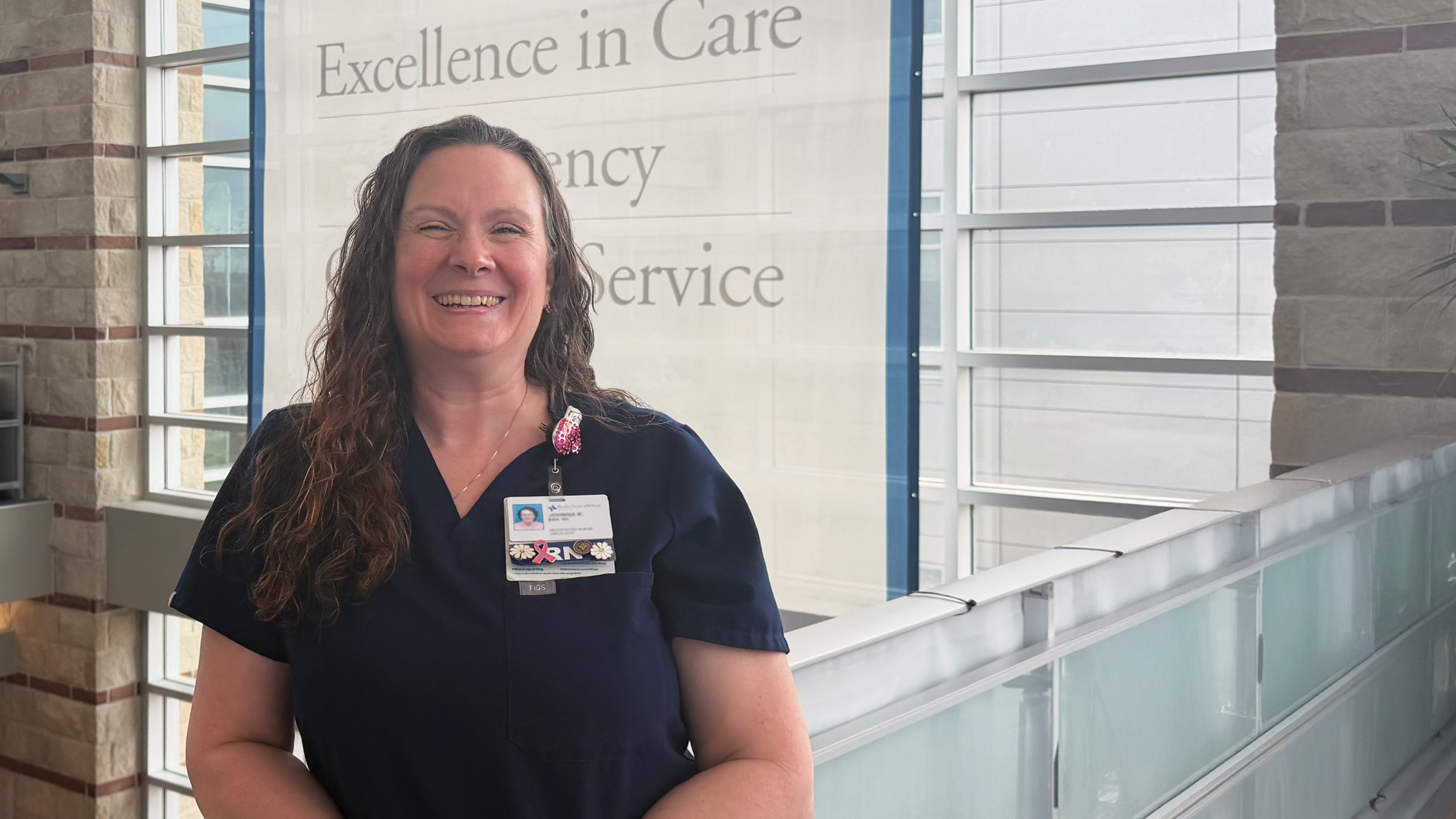
Throughout her treatment, Deborah found herself surrounded by a neurology team deeply committed to helping patients with complex neurological conditions regain their independence. The Neurology Infusion Center at Baylor Scott & White – Temple provides essential therapies for patients like Deborah and delivers specialized care for individuals coping with conditions such as CIDP, multiple sclerosis, chronic migraines, myasthenia gravis, and Guillain‑Barré syndrome.
For Deborah, having a team trained to understand her condition and ready to support her through the hardest days made all the difference.
Progress came slowly: from wheelchair to walker, then walker to cane and finally—months later—to walking on her own.
The first day Deborah walked into the infusion center unassisted, the staff who had supported her through hardest days celebrated right along with her.
“Every day I’d repeat to myself, I am going to walk again. I am going to walk again,” she said. “Holding onto that belief and my faith in God is what kept me moving.”
Walking again—and refusing to go back
Deborah still faces challenges. Her feet remain numb, and some tasks take extra effort. But she cooks, does light housework and moves independently around her home—victories she once feared were gone forever.
Her gratitude for her care team runs deep.
“If it wasn’t for them, I honestly don’t think I’d be here,” Deborah said. “I learned that if this disease isn’t treated, it can even weaken the muscles you need to breathe. They saved my life.”
Some of her sweetest celebrations come from her grandkids, who once believed that their Mimi couldn’t walk. Now they proudly cheer her on.
“They used to hold my hands to help me walk,” Deborah said with a smile. “Now they say, ‘Look at Mimi go!’”
Through every setback and breakthrough, Deborah held onto one belief: that her mindset mattered as much as her treatment.
“It’s hard work, and it takes time,” she said. “But you must keep going. Your mind must be stronger than the disease. I am not going back to a wheelchair—I have come too far.”
Expanding access to life‑changing neurological care
The Neurology Infusion Center at Baylor Scott & White Medical Center – Temple is growing to meet the increasing needs of patients in our community.
Today, physicians on staff order 500–1,000 infusions each month. Yet, with only three infusion chairs, the center can only provide 50 infusions each week. This gap means longer wait times and added stress for patients already facing serious health challenges.
This expansion will allow more patients with complex neurological conditions to receive timely, life-changing care in a compassionate and supportive environment.
With donor support, we plan to create a new, dedicated infusion space with seven additional infusion chairs, more than tripling our current capacity. This investment will significantly expand access to critical treatments and help ensure that patients can receive the care they need, when they need it.
Together, we can make a difference for every patient who depends on this vital service.