

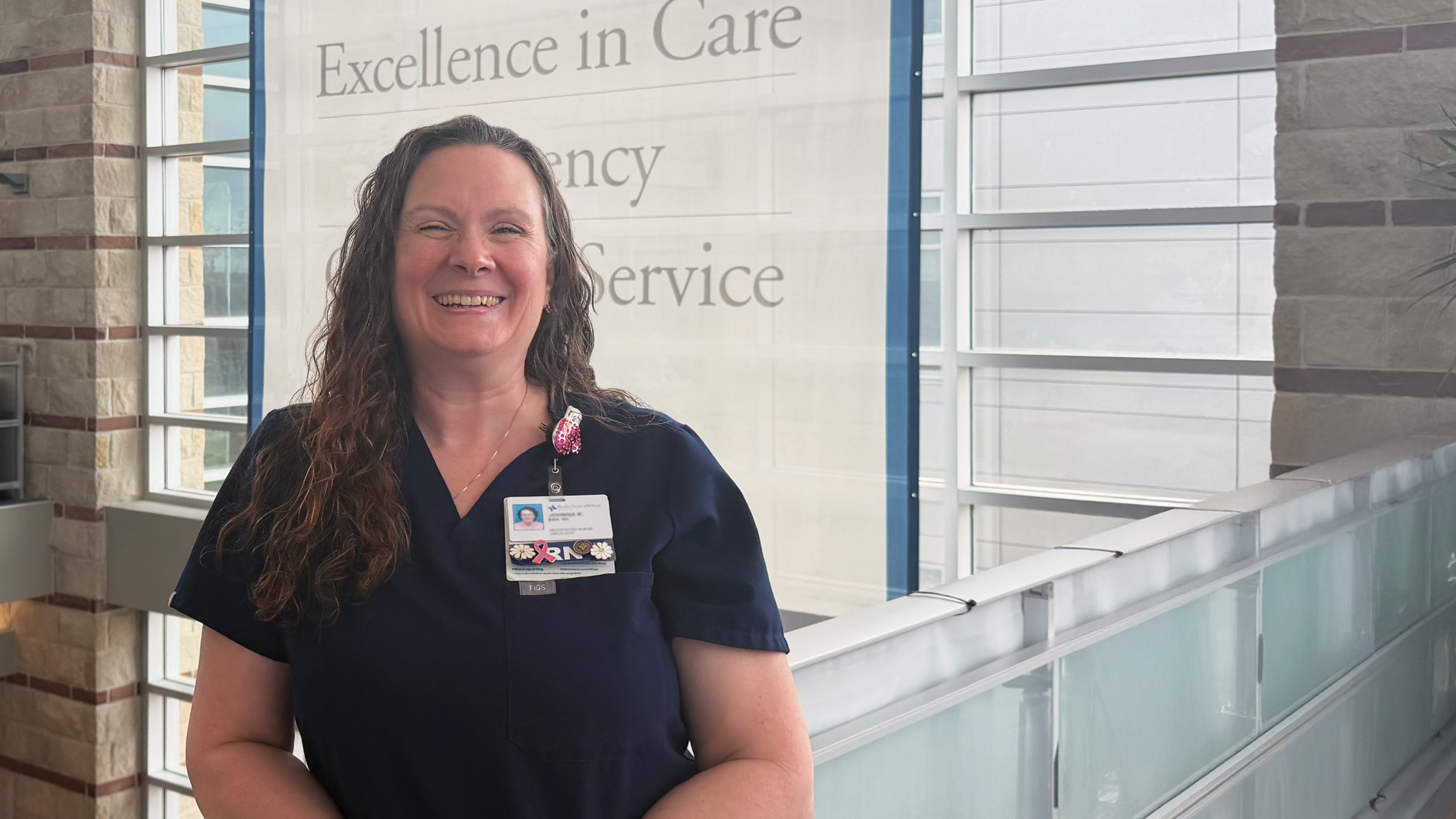
Johnna was well into her career as a medical-surgical nurse at Baylor Scott & White when life took an unexpected turn.
“I was breastfeeding my youngest son when I noticed a lump,” she recalls. At first, she assumed it was a clogged milk duct. But then her sister mentioned a co-worker whose similar lump turned out to be breast cancer. “I immediately thought, ‘What if that’s me?’”
A life-changing breast cancer diagnosis
Johnna scheduled a mammogram, and the results were devastating. The diagnosis was stage 2 breast cancer with two positive lymph nodes.
“I was shocked and terrified,” she says.
Johnna underwent a mastectomy, 18 weeks of chemotherapy and radiation therapy at Baylor Scott & White Cancer Center – Round Rock. This comprehensive treatment is standard for breast cancer, but the process is grueling.
“The first four weeks were the hardest, physically and emotionally. It was the most difficult time of my life,” Johnna says.
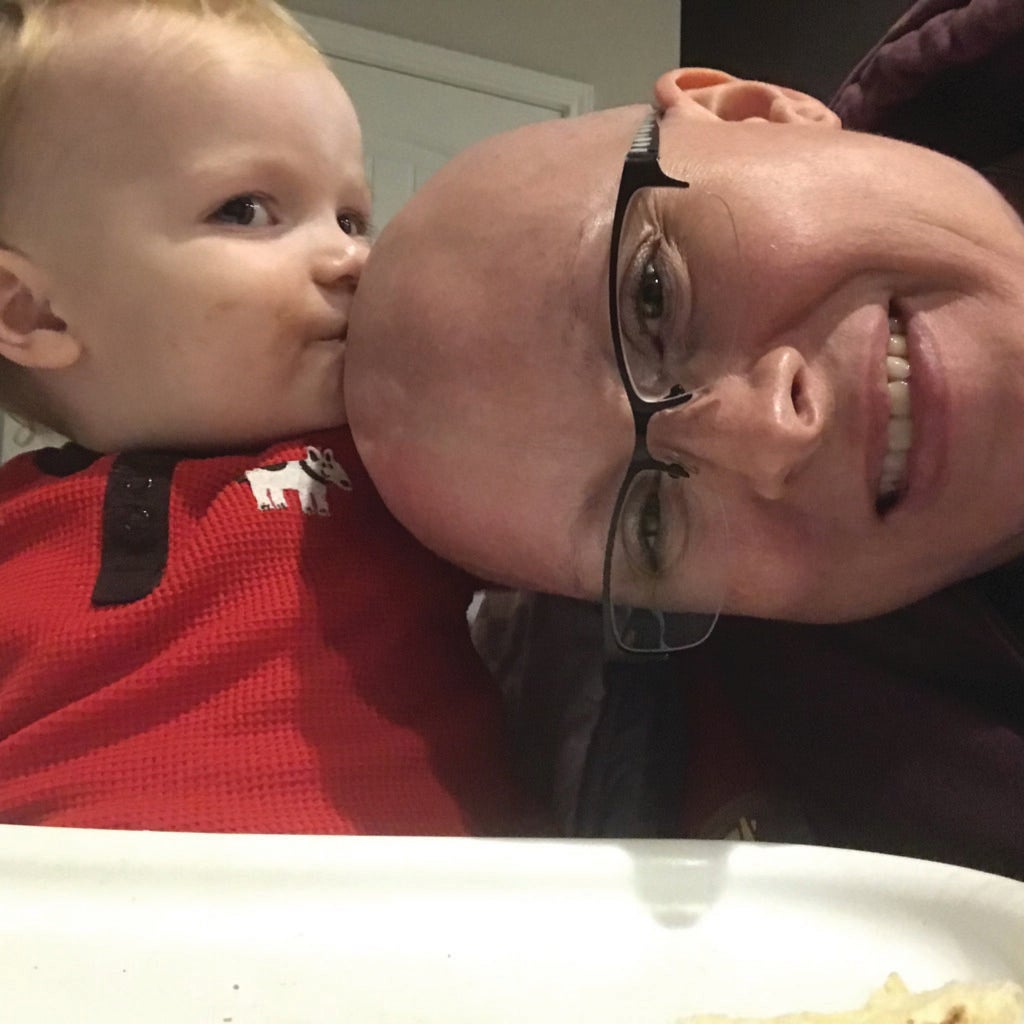
The critical role of a Nurse Navigator in cancer care
During her treatment, one person made a life-changing difference: her nurse navigator.
Nurse navigators are specially trained registered nurses who guide patients through the complexities of their cancer journey. They help coordinate appointments, explain complex treatment plans and provide emotional support during some of the most stressful moments in a patient’s life.
“She told me exactly what to expect and guided me through every step,” Johnna says. “Her support meant everything. I truly couldn’t have kept going without her.”
Turning her hardest moments into new purpose
Johnna’s story inspired family and friends across the country to get cancer screenings of their own. When some received their own diagnoses, many turned to her to ask, “What happens next?”
“I became this person that people reached out to,” she said. “That’s what led me to want to be a navigator myself. My navigator was my person—the one I could call with any question. I wanted to be that person for someone else.”
Coming full circle at Baylor Scott & White
Now cancer-free, Johnna works as a nurse navigator at Baylor Scott & White Cancer Center – Round Rock, the very place where she received care.
“I wanted to offer the same comfort and guidance my nurse navigator gave me,” she said. “To stand beside patients during their hardest moments and help them find hope. I know firsthand what they’re going through, and it feels incredibly meaningful to help.”
How donor support makes compassionate care possible
Johnna is proud to work for a not-for-profit healthcare system like Baylor Scott & White, where donor generosity makes programs like nurse navigation possible.
“Their support ensures patients receive not just exceptional medical care but compassionate guidance,” she said. “And that truly changes lives.”